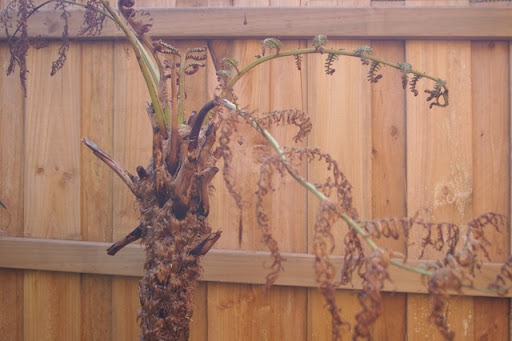
My wollemi pine gets its anuual-ish repoting. Compared with other pines here in victoria it is looking healthy with some new growth visiable (probably related to the fact that i still "hand" water it by placing it in a bucket of shower water regularly). However it is starting to look just a little spindly and I am wondering if it is a good idea to prune and if so when? Checking the wollemi website suggests shaping is a good idea and anytime of the year, but sterile secateurs!
Wednesday, December 03, 2008
In good health
My wollemi pine gets its anuual-ish repoting. Compared with other pines here in victoria it is looking healthy with some new growth visiable (probably related to the fact that i still "hand" water it by placing it in a bucket of shower water regularly). However it is starting to look just a little spindly and I am wondering if it is a good idea to prune and if so when? Checking the wollemi website suggests shaping is a good idea and anytime of the year, but sterile secateurs!
Monday, July 28, 2008
Position, Position, Position
Swalim (the Somalia Water & Land information Management) project has put their comprehensive Rainfall Observers Manual on the net.
The rain gauges that come in most weather station kits are based on tipping buckets. These are generally not as accurate at the conventional graduated cylindrical collectors, for a couple of reasons. A certain amount of rain is needed to tip the buckets and the rain event may finish before the bucket is tipped, where the rainfall is infrequent and low this can be an issue. Also the tripping mechanism may have considerable tolerance (most are made of molded plastic) and it may be wise to "calibrate" the readings against a convention gauge (using a few decent rain events of perhaps 2mm of more)
Sunday, July 27, 2008
Handling the pressure
The earth atmosphere gets thinner with height, because of the weight of air above it is less. Infact an aneroid barometer can be used to measure altitude. Air pressure gets roughly 1 hectopascal (Hpa) lower for each 10 metres of ascent. To test this I took my reference barometer (a decorative one rather than a highly precise instrument) for a drive up to Olinda in the Dandenong ranges. I got a rough reading from Google Earth that I started at 74m and reached 577m elevation at Olinda (this is most probably several 10s of metres out by the way but I was only interested in relative height difference and have assumed that both estimates are similarly out). The initial reading of the barometer was 1010 HPa and was 960 Hpa after I let it rest for
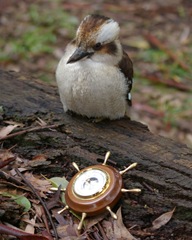
Most published weather charts show the air pressure at sea level (MSLP, Mean Sea level Pressure) and so it has become a convention to set barometers used in weather prediction to a "relative" pressure at sea level. Normally you can obtain this by finding details of a nearby government weather observatory (BOM Bureau of Meteorology in Australia) and adopting that pressure as your reference. Modern aneroid barometer often have a small adjustments on the back to do this. Digital barometers and weather station usually have a set/calibrate procedure, to change the displayed reading.
Saturday, July 26, 2008
Weather Station Gwondana
Rather than just think conspiracy theories about the dams and rainfall I figure it might be more constructive to start observing the weather events myself. Surprising it is possible for anyone (with an interest in weather) to do some simple observations themselves and become proficient in local weather forecasting themselves (at least that what the Discover Nature in the Weather websites say).
All that is required is some simples measuring apparatus, and most of that can be homemade if you want. The key items are -
Whilst I have "analogue" version of all these apparatus and know how to use them I was inspired to go "digital" and get a wireless weather station that has an "indoor" LCD control panel, that receives data wirelessly from external mounted measurement devices. Its not a model that can be connected directly to a computer (and then the net) that would make this extravagance way too expensive.
So my weather station is in (just above my cretaceous garden, and over the next few weeks I will be calibrating things. After that you can expect some weather observations to start appearing in here.
Sunday, July 13, 2008
I am not normally a fan of conspiracy theories
Looking at the published levels of stored waters in our dams in Melbourne is a little depressing, it is only just at 30% of capacity at a time when there have been some decent rain events (I have rain gauges and tanks), so is there a conspiracy are we being told the truth?
I started looking to find an independent way to verify this (ie not just looking at one source of data). If you look at the Melbourne Water website they have a graph that shows the inflows into the dams over 2007 are roughly at the average for the last 10 years but that they were only half this in 2006.
I then look at the Bureau of Meteorology statistics (see graph below), it is clear that rainfall is below average (between half and three quarters of this part of Australia. So superficially thing check out.
However at a more detailed level things don't seem to match up. We should have had lower levels in the dams last year, but it seems a lot of water was "taken" from the Thompson scheme. Then A lot of water was lost in some flooding in Gippsland ...etc ... etc the plot thickens, but not quite to a conspiracy level but I do think this has the hallmark of politicians with their hands on what history is being recorded (sorry disclosed).
But where & how to build an independent view?
Wednesday, July 09, 2008
first blushes of spring
Monday, September 17, 2007
Other Gwondanaland Plantings
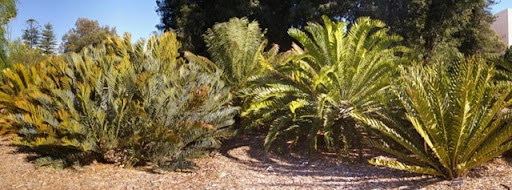
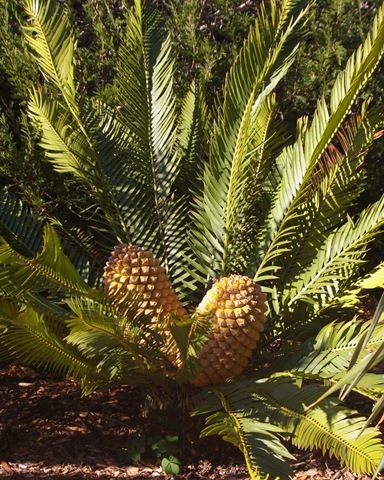
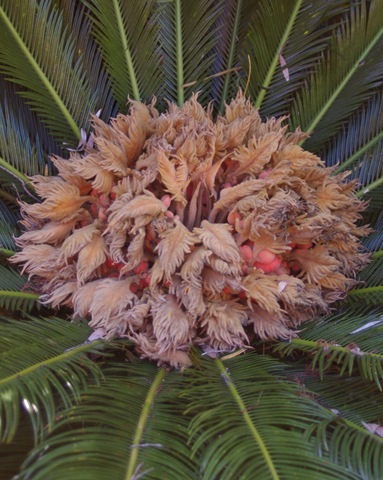
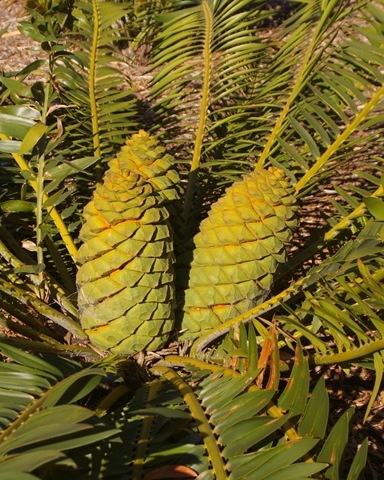
I do not want to give you the impression I have the sole little piece of gwondanaland struggling to survive. A lot of direct descendants of the original Cretaceous forest still struggle on today out in wild. Some are ideally acclimatized for the harsh climates of southern Africa and Australia. Others are tropical forest specialists. Some are being pampered in special collections, like these cycads in Adelaide's Botanical Gardens.
Sunday, September 09, 2007
The green drought!
It has been a long time between post. I seemed that the rain had come and things where returning to their normal seasonal cycle.
However I have just noticed that the new fern was looking decidedly dry. Maybe it was true, the myth of a green drought was coming true. I firmly believe the culprit was actually a few days of unseasonal dry north winds, but I am returning to the shower bucket method and watering the head of the stem as new shoots emerge just to be on the safe side.
Thursday, April 12, 2007
The palm "terrace" takes shape
The new fern has prompted me to remove the remaining bamboo (a hard task by the way) and start the basis for the palms end of my cretaceous garden. I know "Palm Terrace" is a lofty title but it is a fraction elavated. I plan to leave the center hollow so I can rotate potted palms from indoors. The soil is hopeless clay but in the process of digging out the babmoob runns it has had a good digging over. I plan just to add about 30cm of leaf litter rather than a top soil to gove it a rainforest floor feel. The fern looks quiet happy after its transplant, despite the continued warm (and dry weather)
Saturday, April 07, 2007
something new
This is the first time I have noticed a spiders web in my cretaceous garden. It might indicate that the garden is drying out, normally I associate spider webs with dry, very low humidity, places. Whilst i have seen plenty of spiders around, red backs, white tails, and huntsman, but i suspect this is an orb spider web (the nicely circular section on the center is very characteristic). You never know it may well be a close relative of the spiders in space that perished when the columbia came apart on renetry. Those golden orb spider came from around this way.
Looking around the web, internet that is, I still can't find any evidence to support my suspicion that spiders webs mean the garden is drying out, but here is great page a spider myths
Thursday, April 05, 2007
saving a tree fern
The tree ferns of melbourne are having a hard time, even my own ones. They seem to have been dropping their outer fronds, dry and brown at a great rate. I suspect it is just a sign of drought stress, a lot consider that they are dying. Anyway to cut a long story short I have me offered a couple if i think I can save them.
Well I may as well have a go, my first patient is a very thin fern and I can not figure out exactly which species it is, my best guess is Dicksonia fibrosa. So rather that just do the old saw it off and stick it back in the ground, whichwork well enough for Dicksonia antarctica, I decided to get a significant part of the root mat, which were only growing across the surface.
The final problem remains where to plant it?
Sunday, April 01, 2007
Something for April Fool's Day
The aprils fool day message bit is that this should have triggered level4 restrictions. However the Victorian government, or more specifically those politicians based in Melbourne,has gone a bot weak at the knees and changed the rules. So now we are have a claytons change to the rules when a real change to the rules could have had a bit of a voter backlash. So now we have water restriction level 3a.
Saturday, March 31, 2007
Happy Plants
Friday, March 30, 2007
rain

Well decent rain is falling, and we may even get close to our normal march average. With the long term predictions still suggestion better than average rains through autum. If you are interested the Australian Bureau of Meterology has a great area on their website to graph and compare a number of key climate measures.
sorry for the hiatus
I've been away and back and away a lot, so my humble cretaceous garden has had to fend for itself. It has done so admirably, compared with other more conventional plantings elsewhere in my garden. So I think there may be a myth, ormoral here, perhaps cretaceous plants thrive best by neglect! (and tropical weather, even without the rain).
Monday, February 19, 2007
What the?
The bamboo, that I still intend to remove, is one plant flourishing, But why the heck is this new miniature growth appearing on most spikes. Is it the mythical 50, or was that 500 year flowering. The myth says all the bamboo dies (now that would be a good thing) after that gregarious flowering event but famine, dark despair and untold hardship descends on the land.
Sunday, February 18, 2007
the rule of 10
So "How long to water?" is probably the big question around here at the momement. My mother's suggestion is possibly the best I have heard
Count to ten (1..2..3..4..5..6..7..8..9..10) slowly as you water important shrubs
...my mum
How much water the plants get depends mainly on your water pressure and which nozzle setting you have on your triger hose (under current water restrictions you can only water, at the designated times, using a hose fitted with a trigger nozzle, which instantly cuts off the water when you release it). However it is easy to work out the flow, just place the hose into a standard plastic bucket (most of which have volume marks on the side) count to 10 and see how much water is there. With a bit of calibration you might be happier count to 5,7 or even 15).
How much water your garden needs, is a more complex issue and is sure to be the topic of posts to come.
Tuesday, February 06, 2007
The bucket brigade, a month on.
Melbournians, including me, have embraced using plastic buckets as a really easy way to save water (eg. first flow in the shower). In fact their has been a massive 24% reduction in water usage for january 2007 (compared with the same time last year) in a year when January has been significnatly hotter and drier than average. So water restrictions are working and most people are acting responsibly. We even have a website to monitor weekly water usage now.
Well done folks.
Monday, February 05, 2007
Drip Watering #4
The Melbourne City council have come up with a great way to water their significant trees. All around the center of Melbourne at the moment you will see the red and white traffic barriers babysitting a big tree. These barriers are designed to be filled with water to make them heavy, in their normal traffic`hjazard management duties, but with the simple addition of a drip hose they can become a personalised tree watering system that the council can refill with recycled water periodically.
Friday, February 02, 2007
Nocturnal visitors
This guy, a small bushtail possum Trichosurus vulpecula, is not such a welcome quest. His relatives devastate fruit frees and prize plants around here this time of year and seem to be flourishing in tree lined street of Melbourne. Whilst they are officially protected in Victoria, most locals consider them pests. Despite looking cuddly and docile these small marsupials have sharp teeth and claws as many dogs and cats soon find out.
This is the species of possum that has caused such environmental destruction, when they were introduced to New Zealand.


![Wollemi Pine [Wollemia nobilius] website](http://photos1.blogger.com/x/blogger2/1930/3564/240/362820/gse_multipart1061.jpg)